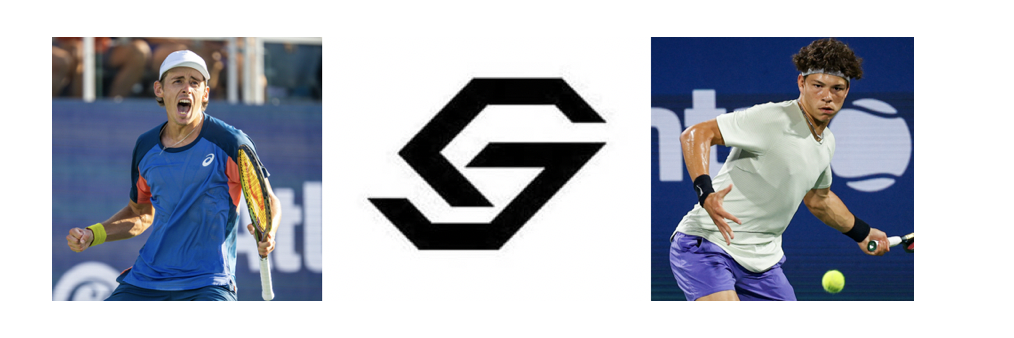


At elite level tennis, rallies rarely unfold the way spectators imagine. What looks like a spontaneous exchange is often the end product of months of pattern-scouting, probability modeling, pace-management ratios and micro-decisions anchored in data that only coaches regularly see.
The sport has become a laboratory of predictive cues: foot-pressure maps, directional aggression indices, defensive reset thresholds, and even “serve-plus-two” risk envelopes.
Somewhere in that complexity sits the fun side too — the same instincts that drive fans to place bold predictions on platforms like Bitz casino, trying to read momentum the way analysts do.
The hidden language of point-construction isn’t esoteric secrecy; it’s the operating system behind modern tennis, and once you see it, rallies look entirely different.
Geometry Before Power: The New Spatial Probability Models
Coaches today spend less time arguing about technique and more time arguing about geometry. The modern game is built around spatial probability: how angles open, how much court a player concedes on a recovery step, and what shape of ball increases downstream winning percentage.
When fans assume it’s simply “hit harder,” pro teams see a board full of heatmaps, decision windows, and pressure-to-space ratios.
Before we get to the surprising part, here’s one of the core models analysts use — one that most amateurs wouldn’t guess is so central to elite planning:
| Feature | What It Measures | Why It Matters |
| Depth-to-Angle Index (DAI) | Ratio of ball depth vs. angle created | Determines whether aggression raises winning odds or exposes court |
| Lateral Recovery Tax (LRT) | “Cost” of each extra step taken after a wide shot | Predicts fatigue accumulation across long rallies |
| Trajectory Disruption Value (TDV) | How well a shot breaks opponent’s preferred contact height | Core tool for destabilizing flat-hitting players |
These metrics help coaches quantify how a point breathes. A player with a high DAI doesn’t just “hit deep” — they manage depth relative to angle to keep patterns predictable. A low LRT player — think peak Djokovic — recovers more economically, allowing repeat pressure without losing court.
Between these spatial metrics and the next layer — intent sequencing — coaches often run what they call “shot-chain models,” designing points as three-segment arcs rather than isolated hits.
Common Shot-Chain Intentions Used in Pro Match Plans:
- Neutral to Inside-Out to Net Crash: Used to test opponent’s running forehand before forcing off-balance pass.
- Backhand Redirect to Deep Middle to Body Serve Pattern: Creates contact height discomfort, then exploits that memory on serve.
- High Roller to Short Slice to Step-In Forehand: A geometry-first trap that manipulates court position rather than power.
- Inside-In Pressure to Crosscourt Reset to Sudden Line Acceleration: Particularly effective against players who over-anticipate patterns.
These chains aren’t theoretical — they are crafted from hundreds of measured rally outcomes. What fans see as improvisation is often the execution of pre-agreed geometric scripts shaped by spatial probabilities and contact-height modeling.
The “Intent Levers”: What Players Actually Adjust During a Rally
If the previous section explained where the point is built, this one explains how pros pull tactical levers in real time. The second paragraph contains only a list, so first let me set the scene clearly.
Coaches break rallies into micro-decisions rather than strokes. An elite player toggles between tactical “modes” depending on ball height, speed, opponent’s balance, and corridor availability. Fans see a forehand; analysts see a probability hinge.
Even bettors trying to read momentum mid-match on sites like Bitz.io often track these same momentum cues without knowing the underlying tactical language. The following list represents the internal adjustment categories used in high-performance match analysis, terms most recreational players never encounter.
The 12 Tactical Intent Levers Used in Modern Coaching:
- Contact-Height Override – switching intention solely based on incoming height, regardless of ball speed.
- Corridor Collapse – narrowing the available hitting lanes using high-spin balls that shrink angles.
- Tempo Stall – deliberately lowering rally tempo to break opponent’s acceleration rhythm.
- Tempo Spike – inserting sudden pace bursts within stable patterns to force timing errors.
- Deception Window – delaying racket preparation to manipulate opponent’s first step.
- Shadow Patterning – mirroring previous rally shapes to bait anticipation, then breaking the pattern.
- Defensive Reset Trigger – using a high, deep ball only when recovery position falls below a threshold.
- Serve-Plus-Two Boundary – pre-planned aggression limit for the first two shots after the serve.
- Width Testing – pushing shots wide early to estimate opponent’s comfort defending the outer third.
- Balance Taxing – targeting balls at body or hip height to increase opponent’s biomechanical load.
- Vertical Build – constructing rallies up-and-down the court rather than side-to-side to disrupt rhythm players.
- Finish-Point Seal – a predetermined shot (often backhand line or inside-in) that the player uses as their “closure weapon” once a pattern has matured.
These levers form the practical vocabulary of pro match planning. The artistry comes not from having these tools, but from sensing when to activate them — sometimes within a single step, single breath, or single micro-adjustment.
The Opponent-Mapping Layer: How Coaches Pre-Script Vulnerability Zones
A match is rarely “forehand vs. forehand.” It’s a race to chart where the other player breaks down under repeat pressure. That’s why elite coaching teams build opponent heatmaps focused on stress points — court locations where shot quality statistically collapses.
| Zone Type | What It Looks Like | How Players Exploit It |
| Low-Acceleration Backhand Zone | Struggles generating pace from hip-level backhands | Body serves + inside-out forehands |
| Delayed Forehand Trigger Zone | Long backswing on wide forehands | Early crosscourt, then sudden line |
| Recovery-Side Blind Spot | Recovers one step too deep | Two deep balls, then short angle |
| Transition Hesitation Zone | Slow forward movement on short balls | Floaters + short rollers to provoke delay |
Coaches treat these not as weaknesses but as stress amplifiers. Once a zone is charted, they design multi-shot attack scripts.
Typical Stress-Sequencing Plans:
- Backhand Lockdown Plan: High roller – deep middle – angle.
- Forehand Delay Punish Plan: Crosscourt ×2 – line acceleration.
- Depth-Compression Plan: Deep drive – short slice – step-in forehand.
- Transition Panic Plan: Short float – deep ball – net close.
- Serve-Mapping Plan: Body serve – inside-out forehand – trap ball.
These plans transform scouting reports into point-building narratives, where pressure accumulates long before the winner is struck.
Conclusion
Tennis looks spontaneous only until you learn its internal grammar. Every rally is shaped by geometry, intent levers and the vulnerabilities charted long before players step onto the court. Understanding these hidden metrics doesn’t ruin the sport — it makes it richer.
You start seeing stories instead of strokes, strategies instead of chaos. And once you view the game through that lens, every match becomes far more intriguing than the scoreboard suggests.
Leave a Reply