Rafael Nadal broke the all-time Grand Slam record with his victory over Daniil Medvedev at the Australian Open on Sunday. The accomplishment itself, however, pales in comparison to the manner in which he secured it.
His hollow-cheeked face drenched in sweat, Rafael Nadal stared into the abyss of the all-too-familiar anguish of Australian Open disappointment and said, “Not again. Not this time.”
And so it was that a rusty, COVID-recovering, 35-year-old veteran staged the most thrilling comeback in tennis history on Sunday in Melbourne. It was a win so inspiring that it immediately transcended the tennis bubble. It represents the gold standard of everything good sport has to offer: the resiliency of the human spirit, the power of determination, and…yeah…the thrill of watching the most unlikely series of events unfold before your eyes.
And all at a tournament that was in shambles just over two weeks ago.
There was controversy, you see. Through no fault of Nadal’s, prohibitive pre-tournament favorite Novak Djokovic spent the week prior to the Australian Open splitting his time between a detention center and court rooms. The reason? Australia’s visa requirements for COVID vaccination and Djokovic’s lack of one. The end result was deportation for Djokovic and a gaping hole in the Oz Open draw.
In disgust, more than one tennis pundit declared that if Nadal won the event the win would come with an asterisk. Here is the Grandstand’s own Ricky Dimon summarizing the rants of ESPN commentator Cliff Drysdale on the Djokovic deportation:
An asterisk. A small note to indicate that Nadal didn’t *really* win, because how could it possibly count if he didn’t have to beat Djokovic? How, indeed.
Certainly, Sunday’s final will never be called the greatest tennis match of all time. There was just too much diabolically bad tennis in the first 3 sets for it to come within spitting distance of any of a dozen or so brilliant matches in the Open Era. But for all that, it may still be the greatest win of all time. What Nadal managed to do from two sets down and a 0-40 hole at 2-3 in the third is an almost novel-like story arc (Netflix documentary, I’m looking at you).
Nadal scrapped. He clawed and fought. He recognized that pitting his forehand against the fearsome Medvedev backhand was going to earn him a quick trip to the locker room. So he dug in his bag of tricks, and deep down in the dustiest corner he found a different backhand, a bludgeoning weapon of a stroke tagged with the “there is no way I can keep that up for an entire match” label and subsequently abandoned years ago. He brushed off the cobwebs, gave it a little sniff, and unleashed it at the Medvedev forehand. He took the third set and gave himself a lifeline.
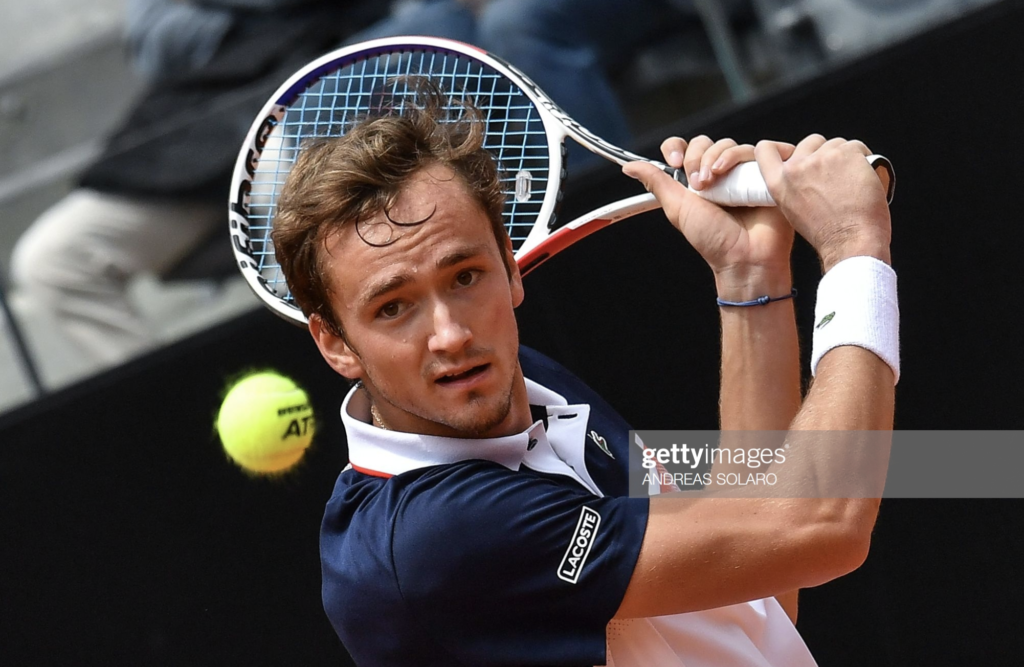
Medvedev took his own turn playing poorly in the fourth. The Russian had leaden legs; the slight desperation born of fatigue (and probably panic at the match slipping away from him) had him going for winners too early and seemed to compromise his ability to play tactically. To the delight of the wildly pro-Nadal crowd, it was the 35-year old scampering around the baseline like an unusually muscular woodland creature enjoying his first spring in the forest. It was, in a word, sorcery–a special Nadal brand of magic of the watch-this-I-can-ignore-my-screaming-joints-better-than-you-sonny sort.
Enter set five.
Taking the third and fourth sets quite literally out of nowhere was impressive, for sure. But by far the most notable thing of an already notable match was the manner in which he absorbed the horror of dropping serve at 5-4 while serving for the championship, giving his hard-earned break back to Medvedev. His Aussie Open demons had already twice materialized in squandering a break lead in the fifth and losing the match. The crowd was thinking it, I was thinking it…and Nadal was certainly thinking it.
As he revealed in an interview with Eurosport, “After that (being broken in the fifth set), I said, ‘F**k, one more time a break up in the fifth and I’m going to lose again, like in 2012, like in 2017. But I said, ‘Okay. I lost (the break). I was nervous, I make a double-fault, I make a mistake. So I need to keep fighting, no? I can lose the match or he can beat me, but I can’t give up, no? Even if I’m destroyed, I need to stay (in it) mentally.’ And that’s what I did.”
As if it were just that simple–like his hopes hadn’t been dashed on that exact court in that EXACT way twice before. And yet he came right back in Medvedev’s service game at 5-5 and broke the Russian again…and with the break, the opportunity to serve for the championship. Again. Which he did flawlessly.
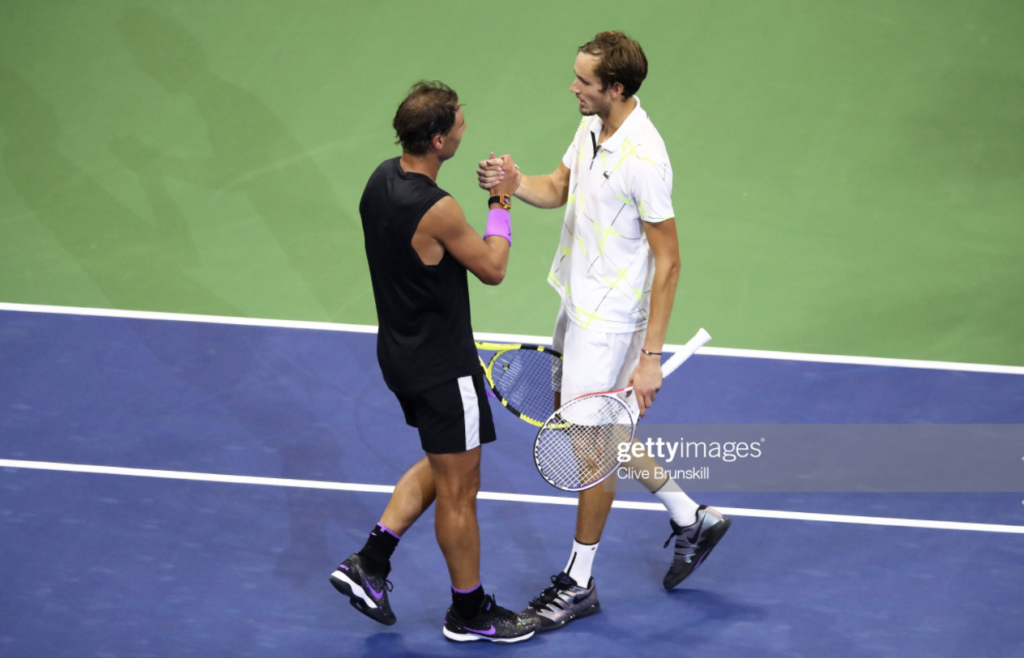
If that’s not one of the most effective “you can all shut up now” messages of all time, I don’t know what is. Nobody with any kind of credibility would dare dismiss this victory as anything other than the miracle it was.
Djokovic wasn’t able to compete, and that is a shame for him and the tournament…but what Nadal did–defeating the reigning U.S. Open champion (something Djokovic was UNABLE to do) for No. 21, for the double-career Grand Slam–is so extraordinary that a talk track that it “didn’t count” is actually embarrassing. So let’s not.
This is tennis, people. And it is glorious.
Leave a Reply