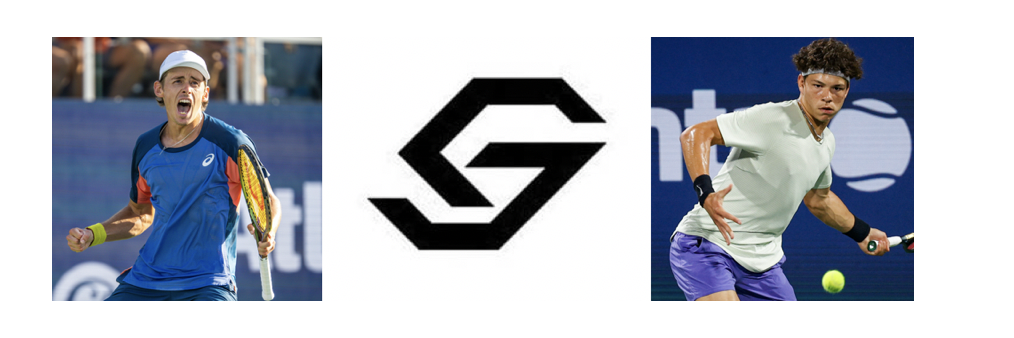

At 3:33 in the morning, Ben Shelton finally finished making his case that tennis does not need help being dramatic.
His closing argument was a 146 mph ace.
Shelton’s five-set U.S. Open victory over Carlos Alcaraz lasted four hours and 28 minutes and produced the latest finish in tournament history. What began as a quarterfinal eventually became a test of tennis ability, physical survival and whether anyone in Arthur Ashe Stadium had remembered to cancel breakfast.
The sport periodically worries about attracting younger fans, producing bigger personalities and competing for attention.
Perhaps the product is not the problem.
Perhaps asking people to begin watching at 11 p.m. is.
The Match Already Had Everything
Shelton and Alcaraz did not need a manufactured rivalry or a trailer narrated like the fate of civilization depended on a forehand.
They had uncertainty.
As The Grandstand reported after the match, Shelton dropped the first set, won the next two and then watched Alcaraz storm through the fourth 6-1.
Four sets had produced no answer.
That is what tennis does particularly well. A player can look dominant for 40 minutes and completely lost for the next 20. There is no clock to drain and no teammate available to hide behind when the serve disappears.
Shelton credited the people who remained in the stadium.
“For me it’s always about the people in the crowd,” he said afterward, according to the U.S. Open.
That’s the relationship tennis should be protecting.
Players produce something worth watching. Fans become emotionally invested in discovering how it ends.
Simple.
Except sometimes the ending arrives when normal people are getting up for work.

Great Drama Does Not Require Terrible Scheduling
A match finishing at 3:33 a.m. can be memorable without being desirable.
Shelton and Alcaraz reportedly did not begin until 11:05 p.m. after earlier matches ran long.
There is an important difference between a match unexpectedly becoming an epic and an epic being almost guaranteed to finish during vampire hours because it started ridiculously late.
Nobody wants tennis turned into a television program with a hard stop.
Imagine:
Alcaraz serving at 5-5 in the fifth, but unfortunately we have reached the allotted entertainment window. Goodnight.
No thanks.
But there has to be a middle ground between protecting the competitive integrity of the match and making endurance part of the admission price for viewers.
The hardcore fan will stay awake.
The casual fan might not.
And casual fans are exactly the people tennis keeps saying it wants more of.
Now Shelton Gets Tiafoe
The reward for surviving Alcaraz is another match carrying its own obvious appeal.
Shelton now faces Frances Tiafoe in an all-American semifinal, a matchup The Grandstand has already broken down in its Shelton-Tiafoe preview and prediction.
There are plenty of reasons for interest even before anyone mentions a wager.
Two Americans.
A place in the U.S. Open final.
Contrasting personalities.
A crowd that will have somebody to support on virtually every point.
And, naturally, thousands of people online explaining with absolute confidence why the outcome was obvious approximately six minutes after it happens.
Sports discussion remains undefeated.

The Other Grandstand Is Online
That conversation is now part of watching sports.
A big tennis match ends and nobody simply turns off the television and quietly reflects.
There are group chats, social feeds, forums, prediction threads and arguments about whether a tactical adjustment decided the match or whether somebody simply stopped landing first serves.
For fans who move between tennis, football, basketball and other sports, TheRx.com is one of the long-running sports betting communities where picks, opinions and game-day arguments continue after the event itself is over.
That sort of discussion is valuable because sports rarely provide the clean answers people pretend they do.
Two knowledgeable people can watch the same match and disagree completely about why it happened.
That’s more interesting than 400 people posting “choke.”
Usually, anyway.
Bettors Have a Different Decision to Make
Predictions create another layer of the conversation.
The Grandstand’s semifinal analysis ultimately lands on Shelton in four sets.
A bettor who agrees with that conclusion still has another decision to make.
Where—and at what price?
Those questions matter because sportsbooks can differ in tennis moneylines, set markets, totals, props, rules and available limits.
For U.S. bettors comparing those options, TheRX sportsbook reviews examines operators on practical factors such as betting markets, payouts, banking, bonuses and overall reputation.
That should be a separate exercise from deciding whether Shelton beats Tiafoe.
First decide what you think happens.
Then decide whether the available wager makes sense.
Reversing that order is a good way to become emotionally attached to a price and subsequently invent a tennis opinion to justify it.
Humans are extremely talented at this.
Tennis Does Not Need More Manufactured Noise
There is a broader lesson here.
Tennis is surrounded by the same pressure affecting every major sport: become shorter, louder, faster, more social and more attractive to people with apparently seven-second attention spans.
Some changes make sense.
Others risk overlooking what already works.
Cheryl Murray recently addressed another version of this problem in her Grandstand column on the U.S. Open’s growing influencer culture.
New audiences are good.
Turning the event itself into scenery for somebody else’s content is less obviously good.
The distinction matters.
A newcomer should not need to understand second-serve percentage or return points won before being allowed to enjoy tennis.
But eventually, the tennis has to be the attraction.
Shelton and Alcaraz managed that rather effectively.
No artificial storyline was required.
Two excellent players kept producing reasons not to turn the television off.
Just Start a Little Earlier
Tennis’s unpredictability is precisely why the sport remains compelling.
Nobody knew when Shelton and Alcaraz walked onto the court how long they would play.
Nobody knew who would survive.
Nobody knew that the final point would arrive at 3:33 a.m.
That uncertainty is the product.
Protect it.
Promote it.
Let people argue about it afterward.
Just perhaps begin before the local pizza shops have closed.
Tennis doesn’t have an entertainment problem.
It has a bedtime problem.
Where were the Director and his Flunkies at 3:30am — no doubt sleeping in their own beds.