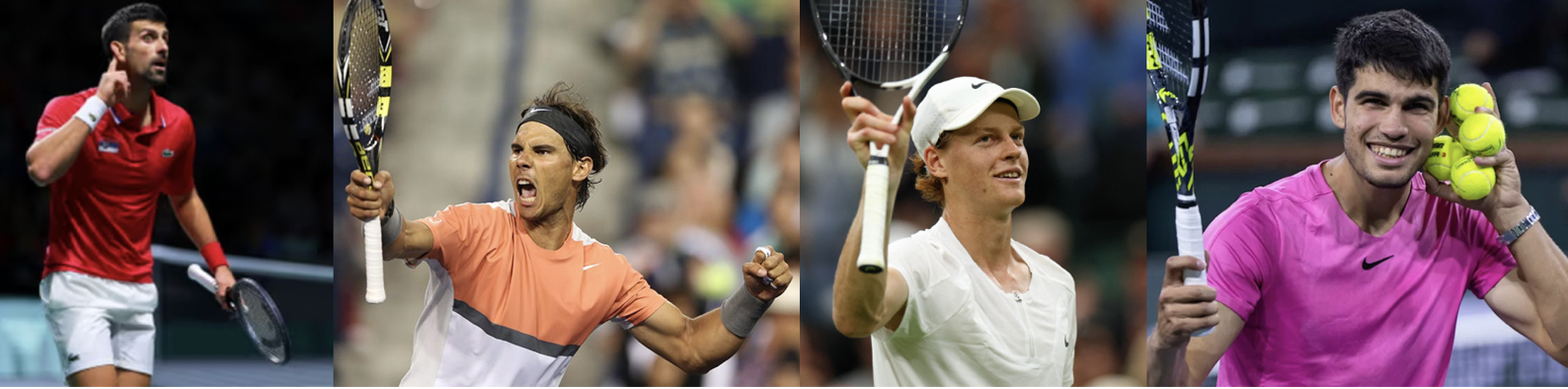

Ask a top player about arm pain and the conversation often drifts toward the ball. Novak Djokovic, Daniil Medvedev, and Taylor Fritz have all complained about how fast modern tennis balls wear down, and the injury figures that surfaced in 2026 gave those complaints new weight. Tennis has always been hard on wrists and elbows, but the latest numbers suggest the problem is growing faster than the sport can respond.
For bettors, this debate matters as much as it does for the players. People who study the matches today usually start with rankings and recent form, but a sore wrist or elbow rarely shows up in those numbers. An injured arm tends to suffer most in long rallies with heavy, worn balls, so a player who looks fine early in a match can fade as the set goes on. That is why news about an arm injury deserves as much attention as a player’s head-to-head record.
What the 2026 Injury Figures Show
Most of the recent alarm traces back to a social media graphic from Patrick Mouratoglou, the former coach of Serena Williams and Holger Rune, based on figures from the Professional Tennis Players Association (PTPA). The graphic showed sharp increases in the first quarter of 2026:
- Upper-body injuries: up roughly 40 percent
- Arm injuries: more than doubled
- Match-ending injuries: up just over 50 percent
- Re-injuries: up about 55 percent
Since the numbers come from a social media graphic and not a published study, they work better as a warning sign than as proof. They show how often players got hurt, but they say nothing about the causes. The arm figure still looks alarming, and the tour has plenty of examples to match it: Carlos Alcaraz spent several months away from singles with a wrist injury, and Jack Draper lost most of his season to a long-term arm problem.
Why Players Point at the Ball
On hard courts, the felt on a fresh tennis ball starts to fluff up within a few games, and players say this happens faster than it used to. A fluffy ball behaves as if it were larger: it moves slower through the air and needs a harder swing to produce the same pace and spin. Over a best-of-three match, the wrist, elbow, forearm and shoulder absorb that extra effort on almost every stroke.
Djokovic, speaking at Wimbledon in 2026, said players agree that something changed after COVID, and he pointed to the factories in China where most major brands produce their balls. Medvedev had described the problem more bluntly in 2023, when he compared worn balls in the last games before a change to apples. Fritz joined in before Indian Wells in 2026, calling the Dunlop slow from the start and even slower once it wears down.
Players with completely different games, from baseline grinders to big servers, describe the same problem in almost the same words, and that consistency makes the complaint hard to dismiss as an excuse. It does not prove that the equipment causes injuries, but it gives the tours a clear reason to test it.
Seven Tournaments, Seven Different Balls
In 2024, a player who went deep through the early hard-court swing faced a different ball at each of seven straight events: Dallas, Delray Beach, Doha, Dubai, Acapulco, Indian Wells and Miami. Readjusting timing every week wears on the arm even when a player is healthy. Fritz had raised the issue back in 2023, when he said three different balls in three weeks had left him with wrist trouble.
The clay swing uses Dunlop from start to finish and the grass events stay with Slazenger, so the inconsistency sits almost entirely on hard courts. The Grand Slams complicate things further because each major signs its own supply deal. A player who competes at all four majors uses three different brands in one season:
| Grand Slam | Surface | Ball brand |
| Australian Open | Hard | Dunlop |
| Roland Garros | Clay | Wilson |
| Wimbledon | Grass | Slazenger |
| U.S. Open | Hard | Wilson |
The two hard-court majors alone use different brands, so the adjustment problem follows players even to the events they care about most. It matters for betting research as well, because a player’s hard-court results from Melbourne and New York come from matches played with different equipment. Comparing those numbers side by side can give a distorted picture of form.
Starting with the 2027 season, according to The First Serve, all seven of those early-season hard-court events will use the same ball, the Dunlop ATP. The ATP has partnered with Dunlop since 2019 and has moved to pick suppliers itself instead of leaving the choice to each tournament’s sponsor. On the women’s side, the WTA says it is working under interim guidelines through 2026 while it develops a longer-term standard.
What the Lexington Test Tried
In August 2026, the ATP took its most concrete step so far at the Challenger event in Lexington, Kentucky, where it shortened the gap between ball changes in main-draw singles with backing from the Player Advisory Council:
- Standard rule: first change after seven games, then every nine
- Lexington trial: first change after five games, then every seven
During the event, the tour collected ball-tracking data and planned to review it at the council’s meeting during the U.S. Open. Whether the shorter intervals reach tour-level events depends on that review. A move up would also force the tours to reopen supply contracts, since manufacturers would need to deliver far more balls per tournament.
A single brand per swing would solve the adjustment problem, but it would do nothing about wear inside a match, which makes the Lexington approach the stronger of the two fixes. More frequent changes deal with wear directly and keep conditions more even from one game to the next. Anyone who studies serve and return numbers before a match would benefit from that as well.
The Ball Is Not the Only Suspect
The men’s season now runs close to 11 months, and the physical demands keep rising as players hit harder and rallies, along with whole matches, last longer. Some of the most damaging injuries of 2026, such as Jannik Sinner’s knee and Rune’s Achilles, had nothing to do with arms, so putting everything on the felt would be too simple.
Heavier and less consistent balls most likely add stress to arms that the schedule and the pace of the modern game have already overloaded. That puts the honest answer to the headline question somewhere in between. Better equipment will not end arm injuries, but the tours can change it far faster than they can shorten the calendar.
Arm injuries also raise the risk of a mid-match retirement, and bookmakers handle those differently: some void the bet entirely, while others settle markets that were already decided before the player quit. For anyone betting on a player who has recently struggled with a wrist or elbow, the retirement rules matter as much as the odds.
What to Watch Next
Over the coming seasons, the tours will show how seriously they take the issue through two decisions: whether shorter ball-change intervals move up from the Lexington trial to tour level, and how the single ball for the early-season hard-court swing works once it arrives in 2027. If arm injury rates fall once both are in place, the players were right all along. If they stay high, the conversation will have to turn to the calendar, and that fight will be much harder to win.
Leave a Reply