The Myth of the Early Prodigy
In the realm of high-performance coaching, we often fall victim to the “Prodigy Trap” — the belief that if an athlete hasn’t summited the mountain by age 23, the window is permanently shuttered. We typically categorize competitors into three tiers: the prodigies who dominate as teenagers, the wunderkinds who peak in their early 20s, and the late bloomers.
Traditional sports science once viewed the late 20s as the beginning of a mandatory descent. However, modern data suggests that peak performance is a variable timeline, not a fixed point in youth. The “Late Bloomer” represents a defiance of biological depreciation, proving that through rigorous adaptation and mental resilience, an athlete can age like fine wine, achieving their most significant milestones when the sport’s traditional logic suggests they should be in retirement.
“Late blooming is not a delay of potential, but a masterclass in perseverance. It is the realization that peak performance is a variable timeline where consistency, adaptation, and mental resilience eventually intersect to shatter the traditional ‘age barrier.'”
To understand this phenomenon, we must look at the “long-arc” careers of those who redefined tennis and global sport in their late 20s and 30s, proving that the highest echelons of success are reserved for those who view time as an ally rather than an enemy.
The Triad of Late Success: Wawrinka, Li Na, and Kerber
The transition from a career plateau to elite dominance requires a specific “pivot point” — a moment where the athlete sheds previous constraints to achieve a higher state of play.
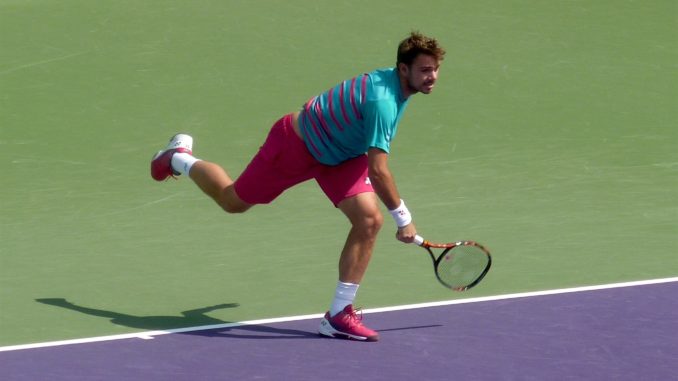
- Stan Wawrinka: Wawrinka’s trajectory is the ultimate testament to the variable timeline. Having not picked up a racket until age eight — a significant delay in a sport of “early starters” — he spent over a decade in the shadow of his compatriot, Roger Federer. The synergy of their paths is striking: they won Olympic Gold together in 2008, yet it took Wawrinka another six years to find his individual breakthrough. His pivot point came at the 2014 Australian Open, where, at nearly 29 years old, he finally emerged from that shadow. He eventually secured three different Grand Slams, famously defeating world #1s in every final.
- Li Na: Her path was defined by a non-linear “cognitive reset.” At age 20, she stepped away from the tour for a 25-month university hiatus. Far from being “lost time,” this break prevented the psychological burnout common in early prodigies. She returned to achieve a career-high of world #2 after age 32, proving that a non-linear path can be the shortest distance to the top.
- Angelique Kerber: Kerber represents the destruction of established dynasties. While she turned pro at 15, she didn’t reach her peak until her late 20s. In 2016, at age 28, she became the oldest woman to debut at world #1, dethroning Serena Williams and proving that momentum can be found — and maintained — well into a third decade.
Comparative Analysis of Late-Career Breakthroughs
| Athlete Name | Breakthrough Age | Key Late-Career Achievement | Primary Challenge Overcome |
| Stan Wawrinka | 28–29 | 3 Grand Slams; defeated world #1s in finals | Shadow of Roger Federer |
| Li Na | 29–32 | World #2; 2 Grand Slam titles | 25-month cognitive reset (hiatus) |
| Angelique Kerber | 28 | Oldest woman to debut at World #1 | Dethroning Established Dynasties |
The “Post-30” Statistical Revolution: Messi, Ronaldo, and Federer
The “30-year-old barrier” has been shattered by a revolution in efficiency. Data from modern icons proves that productivity doesn’t just persist after 30; it becomes more refined.
- Efficiency over Volume: Since turning 30, Lionel Messi has shifted from a pure finisher to a master creator. He contributes a goal every 73 minutes and maintains a high assist rate of 0.40 per game. This pivot in playstyle allows him to maintain elite output while managing the physical demands of the game.
- Sustained Contribution: Cristiano Ronaldo, currently 41 years, 3 months, and 22 days old, continues to defy biological logic. Post-30, he scores every 101 minutes. While his assist rate (0.18 per game) is lower than Messi’s, his volume — 510 goals after age 30 — is a statistical anomaly that redefines the ceiling for athletic longevity.
- Longevity Records: Roger Federer’s “long-arc” is unparalleled. He was the first male player to be ranked #1 for more than 300 weeks (finishing with 310) and remains the only player to hold the top spot for 237 consecutive weeks. By becoming the oldest world #1 at age 36, he proved that technical mastery can compensate for biological cooling.
How do these athletes physically sustain this level of play when biology suggests they should be slowing down? The answer lies in intentional adaptation.
The Mechanics of Longevity: Investment and Adaptation
Late success is not a stroke of luck; it is a result of a rigorous “Survival Toolkit” that prioritizes the maintenance of the human machine and the evolution of skill.
The Late Bloomer’s Survival Toolkit
- Physical Investment ($1.5M/Year): LeBron James provides the blueprint for Mitigating Biological Depreciation. By spending approximately $1.5 million annually on personal chefs, hyperbaric chambers, and cryotherapy, he effectively “buys back” the recovery time that age usually steals. Physical investment isn’t reserved for professional athletes alone. Sports fans looking to engage with the game on their own terms can start small too much like a no-deposit bonus canada, which lets you get in on the action with committing less upfront capital.
- Mental Resilience & Statistical Anomalies: Perseverance through “career-halting” periods is the cornerstone of Building Psychological Anti-fragility. Aslan Karatsev, who reached a Grand Slam semi-final on his debut at age 27, and John Millman, who broke the top 100 at 26, succeeded because they viewed injury and lack of sponsorship not as ends, but as developmental incubation periods.
- Style Adaptation & Energy Conservation: As raw power diminishes, athletes must age through skill. Steffi Graf’s career provides a masterclass; she utilized her backhand slice as a strategic energy-conservation tool. By reducing joint impact and controlling the tempo against younger, more powerful hitters, she maintained a win rate near 90% on clay. Interestingly, her coach noted that while she was 15 chronologically, she was “30 years old” mentally — suggesting that some “late bloomers” are actually “old souls” who simply wait for their bodies to match their mental maturity.
Lessons for the Aspiring Learner
The trajectories of these icons teach us that success is not a race against a clock, but a battle of persistence. For the novice learner or the professional at a plateau, the “Late Bloomer” philosophy offers a path forward that ignores the traditional calendar.
Key Takeaways
- [ ] Audit your hiatus: Treat gaps in your career (like Li Na’s university break) as developmental incubation periods rather than lost time.
- [ ] Reframe injury as a pivot: Use setbacks to build the psychological anti-fragility required for a late-career surge.
- [ ] Invest in the machine: Prioritize early physical and mental “capital” investment to reap the rewards of longevity later in the arc.
- [ ] Pivot from Power to Precision: As your “biological engine” changes, adapt your style to favor skill and versatility over raw volume.
- [ ] Embrace the variable timeline: Recognize that Wawrinka’s Olympic Gold at 23 was just a precursor to his Grand Slam peak at 29. Success arrives when preparation meets the right moment, not a specific age.
Leave a Reply